Fabric Hotpot Warmth Science: How 12mm Insulation Keeps Rotis Warm 6–8 Hours
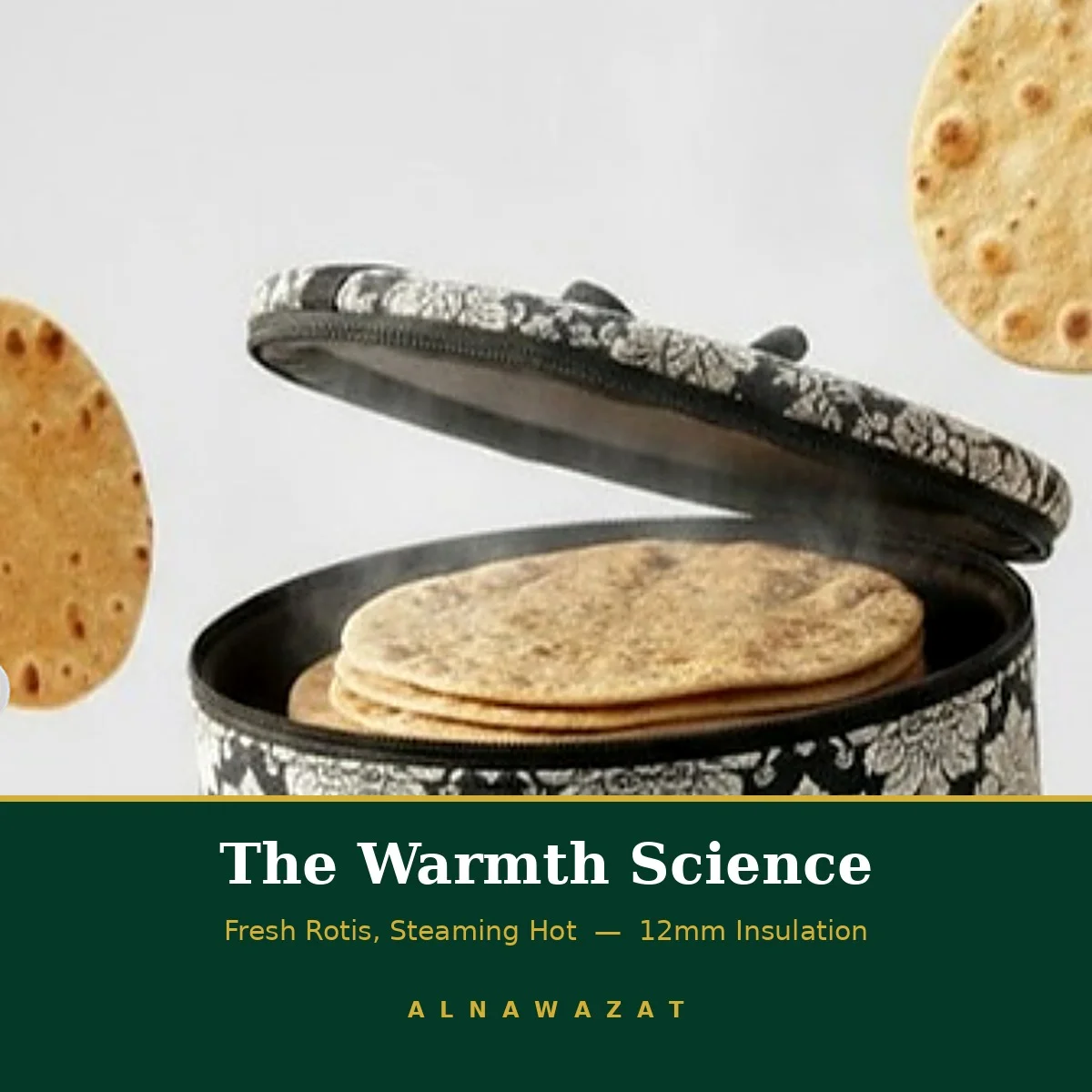
How long does a fabric hotpot keep food warm? For the Alpha Series, the honest answer is 6–8 hours in normal home use. Not a vague "all day", not a laboratory claim — 6 to 8 hours from the moment hot rotis go in with the zip shut.
This article explains how that number works: what the three layers do, what makes warmth last longer or shorter, and how it compares with steel, plastic and thin covers. No invented technology, no guarantees — just the layers, the thickness, and what happens in a real Pakistani kitchen.
Key Takeaways
- A fabric hotpot with 12mm Jumbolon insulation keeps rotis warm for 6–8 hours.
- The three layers are: jacquard fabric outside, 12mm insulation in the middle, breathable cotton lining inside.
- Warmth lasts longest when the zip stays shut, the hotpot is full, and the rotis go in hot.
- Steel and plastic hotpots typically manage 2–3 hours; thin covers manage 3–4 hours at most.
The Three Layers
A fabric hotpot is not one piece of cloth. It is three layers, each with a job.
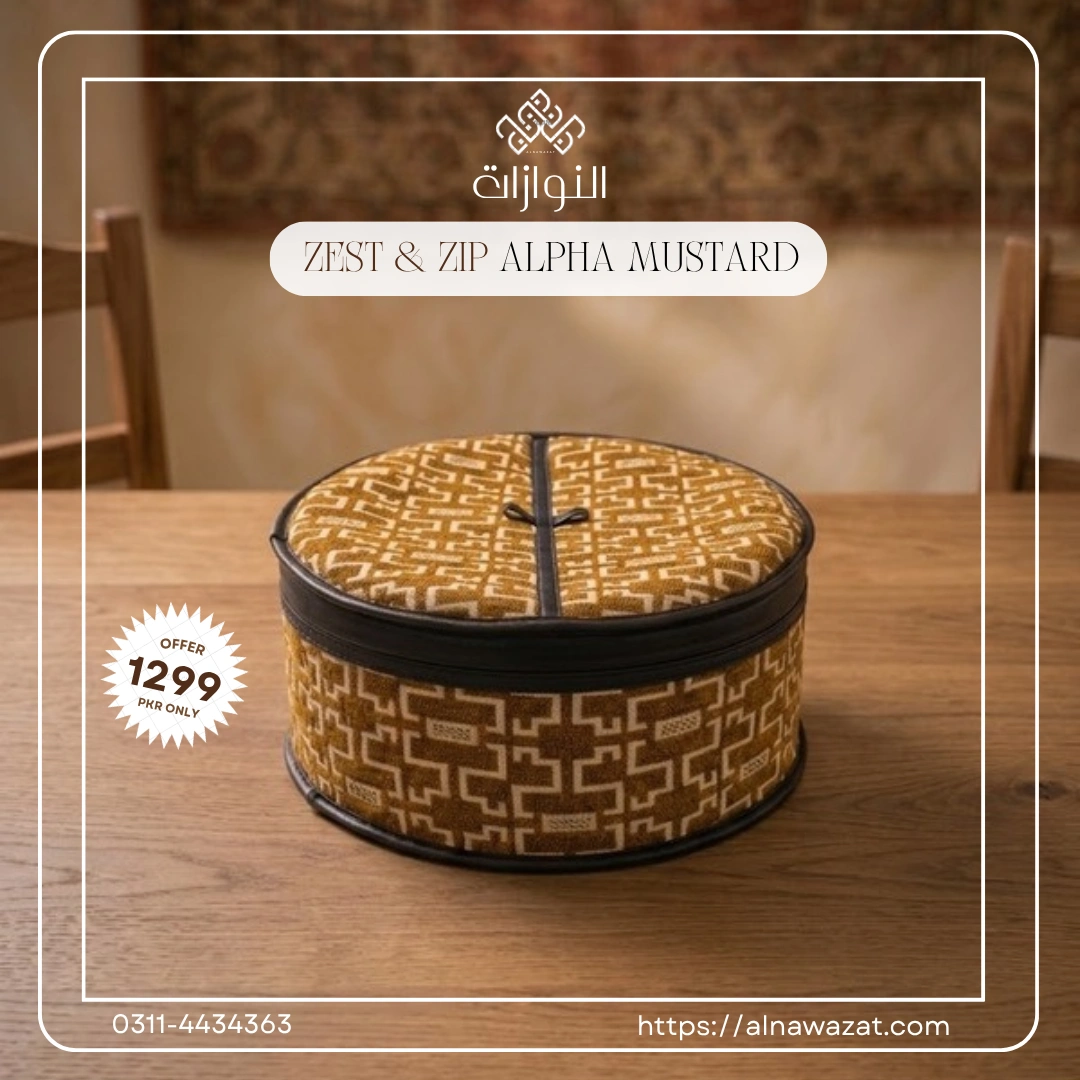
Outside: jacquard fabric. A woven fabric with a raised geometric pattern. It looks premium, resists daily wear, and protects the layers inside. The Alpha range is jacquard — not velvet, which is a different fabric with different care needs.
Middle: 12mm Jumbolon insulation. This is the layer that does the real work. Twelve millimetres of insulation slows heat loss dramatically compared with a thin cover, which has almost no insulation at all. The mm figure is the single most useful spec on any hotpot — compare it first, before price or colour.
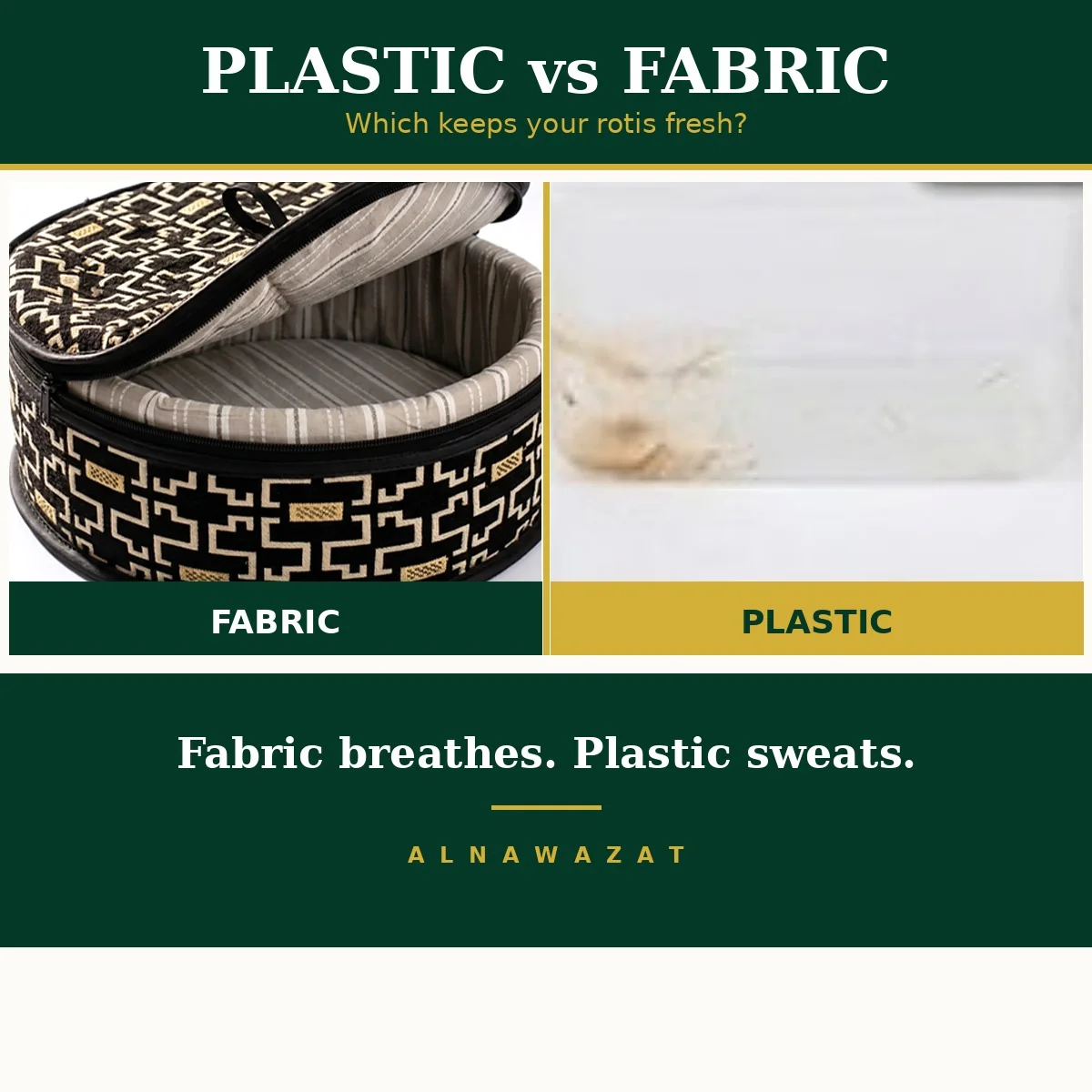
Inside: cotton lining. The lining touches the food, so it matters. Cotton breathes: it absorbs a little steam so rotis stay soft instead of going soggy. A shiny plastic lining traps steam and makes rotis wet.
Three layers, three jobs. Remove any one of them and the warmth drops.
What 6–8 Hours Means in a Real Day
Six to eight hours covers the real rhythms of a Pakistani home. Rotis cooked in the morning are still warm at lunch. Rotis cooked at lunch are still warm at dinner. A dawat that starts late and runs for hours still gets fresh rotis at the last serving.
That range — 6 to 8, not a single number — is honest. Warmth depends on how you use it:
- Keep the zip shut. Every opening lets hot air out. Open it once to serve and close it again, and the warmth holds. Leave it open and it drops fast.
- Fill it properly. A full hotpot stays warm longer than a nearly empty one, because there is more hot food holding the heat. A single holds 12–15 rotis comfortably.
- Put rotis in hot. The insulation slows heat loss — it does not add heat. Rotis that go in steaming stay warm; rotis that go in lukewarm will not magically heat up.
- Mind the room. A hotpot in a cold room in winter loses heat faster than one in a warm kitchen. That is normal physics, not a fault.
A Quick Test You Can Do at Home
You do not have to take the 6–8 hour figure on trust. Pack hot rotis into the hotpot at breakfast, zip it shut, and leave it on the table. Check it at lunch — the rotis should still be warm and soft. Check again at dinner. That is the test that matters: not a laboratory, but your own kitchen, your own rotis, your own meal times. If the zip stays shut between checks, the warmth holds. If you open it every half hour to peek, it drops faster — which is exactly why the test works.
How It Compares
| Keeper | Warmth for roti | Why |
|---|---|---|
| Fabric hotpot, 12mm (Alpha) | 6–8 hours | Thick insulation + cotton lining |
| Steel hotpot | 2–3 hours typically | Rigid walls, thin insulation, lid seal |
| Plastic hotpot | 2–3 hours typically | Thin insulation, steam trapped |
| Thin zipper cover | 3–4 hours at most | Almost no insulation layer |
The gap is not small. A 12mm fabric hotpot keeps rotis warm roughly three times longer than a steel or plastic one, because the insulation is thicker and the lining lets steam out instead of trapping it.
What It Costs
| Product | Price | What you get |
|---|---|---|
| Alpha Single (any 1 colour) | Rs. 1,299 (+ Rs. 250 delivery = Rs. 1,549 delivered) | 12mm Jumbolon, 6–8h warmth, jacquard, 7 colours |
| Alpha Twin Bundle (any 2 colours) | Rs. 2,499 (delivery included) | Save Rs. 1,501 |
| Alpha 3-in-1 Bundle (any 3 colours) | Rs. 2,999 (free delivery) | Save Rs. 3,001 |
Cash on delivery is available across Pakistan, and prepaid orders get 5% off. The single comes in 7 colours — Maroon, Alpha Black, Mustard, Brown, Royal Red, Green Imperial and Classic Black.
How to Care for It
Hand-wash with mild soap, rinse well, and air-dry with the zip open in sunlight. Do not machine-wash it — the insulation layer can bunch up. Do not store it zipped shut while damp. With basic care, a good fabric hotpot lasts years of daily use.
Frequently Asked Questions
How long does a fabric hotpot keep food warm? 6–8 hours with 12mm insulation, in normal home use with the zip kept shut.
What makes it last 6–8 hours? The 12mm Jumbolon insulation layer between the jacquard outer fabric and the cotton inner lining.
Does opening the zip reduce the warmth? Yes — every opening lets hot air out. Keep it shut between servings for the longest warmth.
How many rotis fit in one hotpot? A standard single holds 12–15 rotis comfortably.
Is it washable? Yes — hand-wash with mild soap and air-dry with the zip open. Avoid machine washing.
Can I pay cash on delivery? Yes — cash on delivery is available across Pakistan, and prepaid orders get 5% off.
The Bottom Line
Warmth is not magic. It is a 12mm insulation layer, a fabric that breathes, and a zip that stays shut. That combination gives you 6–8 hours — enough for the whole day's meals, not just the next half hour.
See the full range in the Alpha Single Hotpot collection and the full hotpot range.
Key Takeaways:
- A fabric hotpot with 12mm Jumbolon insulation keeps rotis warm for 6–8 hours.
- The three layers are: jacquard fabric outside, 12mm insulation in the middle, breathable cotton lining inside.
- Warmth lasts longest when the zip stays shut, the hotpot is full, and the rotis go in hot.
- Steel and plastic hotpots typically manage 2–3 hours; thin covers manage 3–4 hours at most.