Plastic vs Fabric Hotpot: Which Keeps Your Rotis Fresh?
Walk into any kitchenware shop in Pakistan and you will find two kinds of roti keepers: the hard plastic container and the soft fabric hotpot. Both promise warm rotis. Only one of them actually delivers for a full meal.
The difference is not the brand or the price tag. It is the material. Plastic traps steam, fabric breathes. Plastic is rigid, fabric is soft. And the numbers are not close: a standard plastic container keeps food warm for 30–40 minutes, while a fabric hotpot with 12mm insulation keeps rotis warm for 6–8 hours.
This guide compares the two honestly — warmth, lining, fabric, care and price — so you can choose with open eyes.
Key Takeaways
- A plastic container keeps food warm for 30–40 minutes; a fabric hotpot with 12mm insulation keeps rotis warm for 6–8 hours.
- Plastic lining traps steam and makes rotis soggy; cotton lining in a fabric hotpot breathes and keeps them soft.
- Fabric hotpots are light, washable and made for roti; plastic containers are rigid and better suited to salan.
- A quality fabric single costs Rs. 1,299 (Rs. 1,549 delivered) — in the same range as many plastic sets.
How a Plastic Hotpot Works
A plastic hotpot is a rigid container with a lid — usually a plastic outer body with an insulated inner bowl. You stack hot rotis inside, close the lid, and the trapped air slows cooling for a while. In practice, that while is short: 30–40 minutes for roti, because the insulation is thin and the lid seal is never perfect.
The bigger problem is steam. Hot rotis release steam continuously. In a sealed plastic container that steam has nowhere to go — it condenses on the lid and walls, drips back onto the rotis, and they go soft, wet and soggy. Anyone who has opened a plastic roti container after an hour knows the result: the rotis are warm-ish, but they are damp and limp.
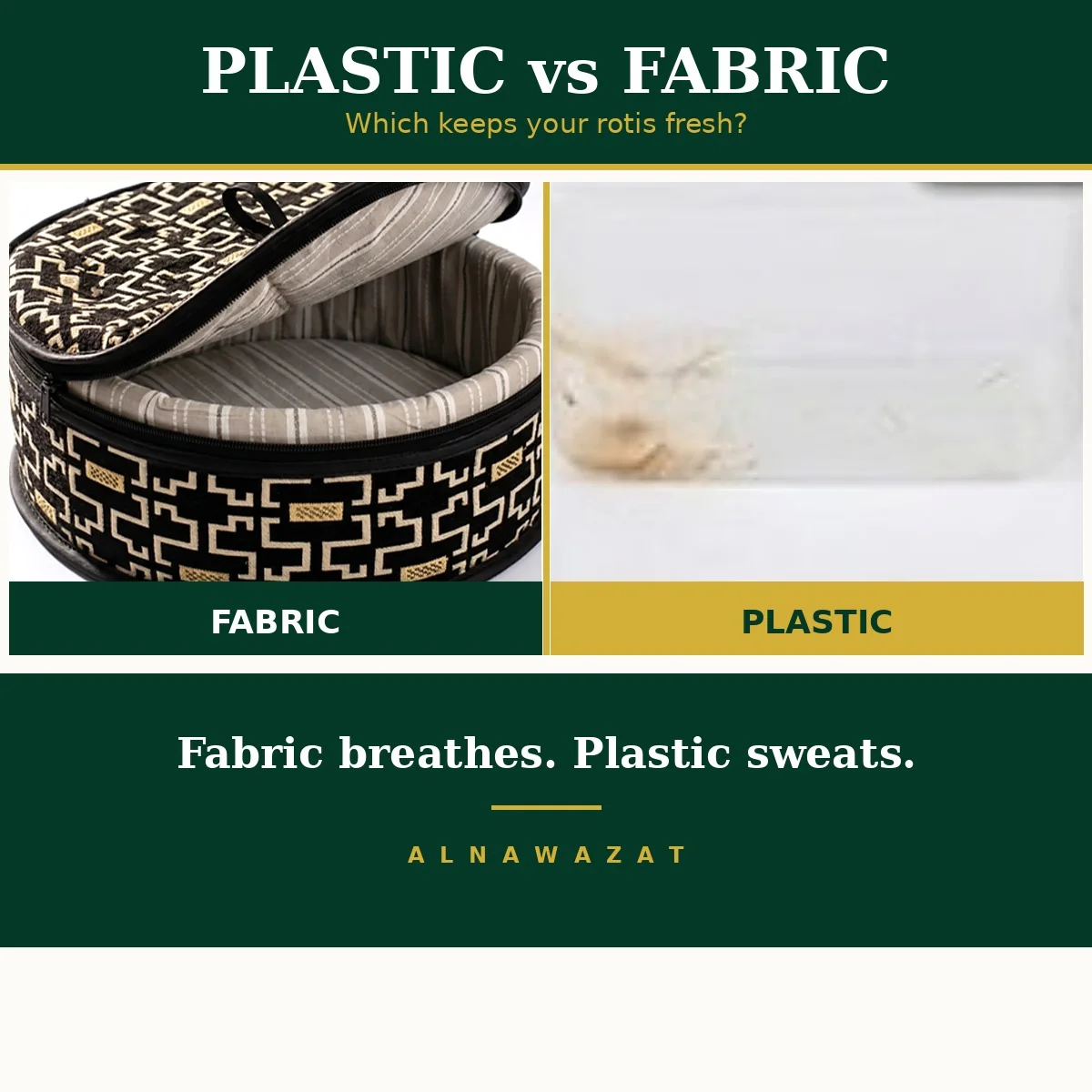
Plastic also has practical downsides in daily use. It is rigid, so it takes fixed shelf space. The lid can warp over time. And when hot food sits in plastic day after day, the container picks up smells and stains that do not wash out easily — the used plastic container in our comparison photo shows exactly that kind of staining.
How a Fabric Hotpot Works
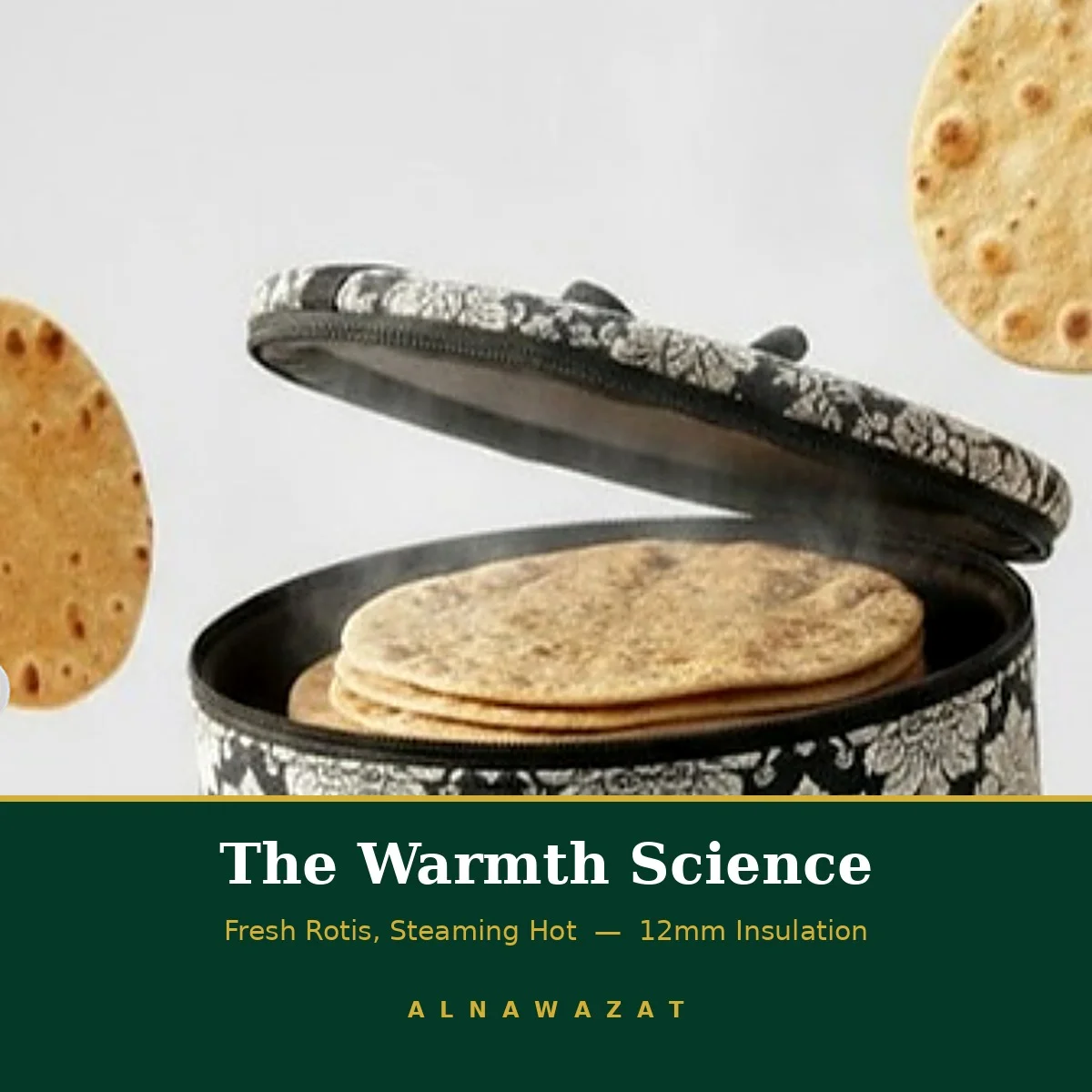
A fabric hotpot is built the other way around. It is a soft, zippered pouch: premium jacquard fabric outside, 12mm Jumbolon insulation in the middle, and a breathable cotton lining inside. You stack hot rotis inside, zip it shut, and the insulation slows heat loss for 6–8 hours.
The cotton lining is the key difference. Cotton absorbs a little steam instead of trapping it, so rotis stay soft without going soggy. The fabric is light and flexible, so the hotpot folds flat for storage and is easy to carry to the table. And it is hand-washable — mild soap, rinse, air-dry with the zip open.
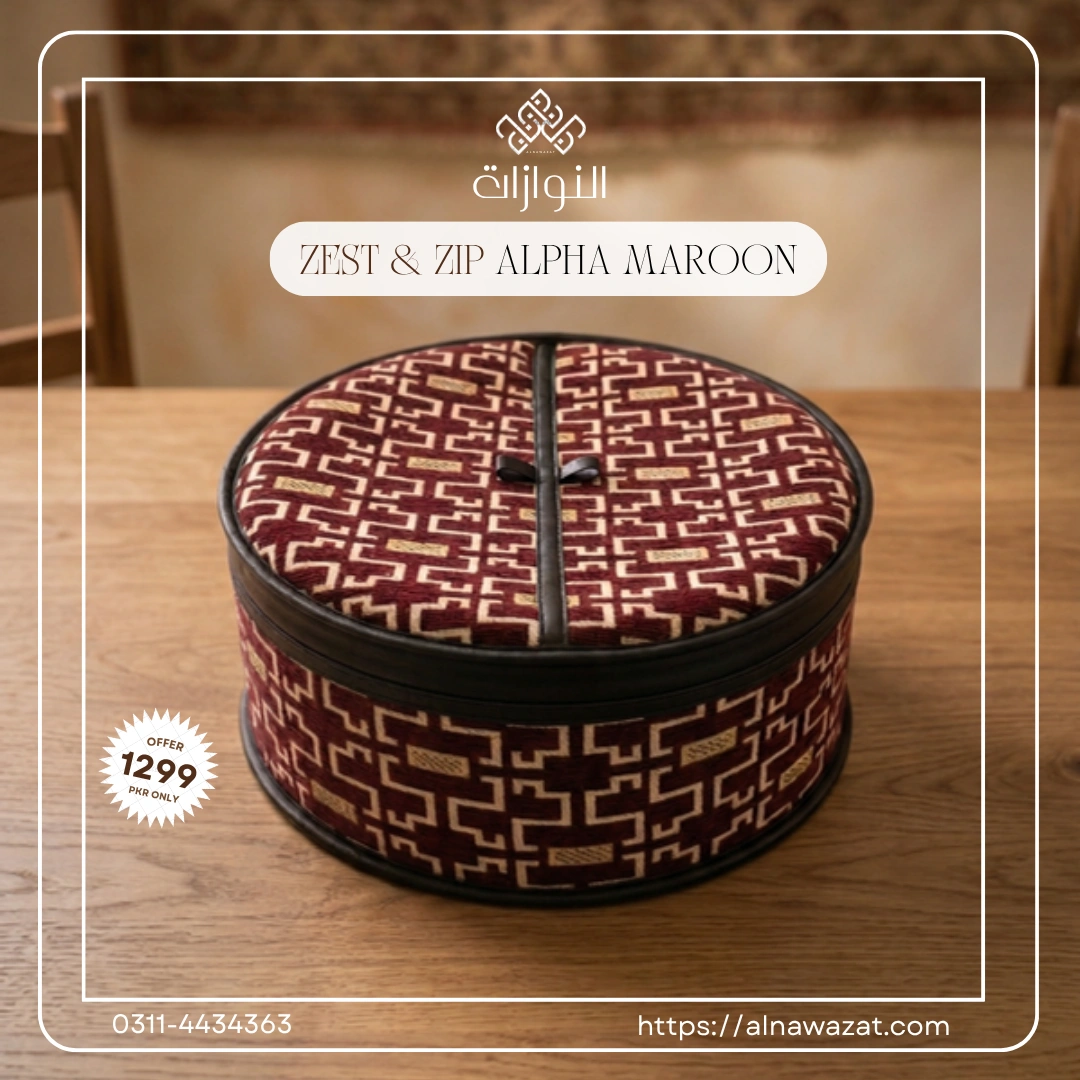
The Alpha Series from AlNawazat uses exactly this build: jacquard outer, 12mm insulation, cotton lining. It comes in 7 colours as a single (Rs. 1,299), a Twin bundle (Rs. 2,499) or a 3-in-1 bundle (Rs. 2,999).
Plastic vs Fabric — Side by Side
| Plastic hotpot | Fabric hotpot (Alpha) | |
|---|---|---|
| Warmth for roti | 30–40 minutes | 6–8 hours (12mm) |
| Lining | Plastic — traps steam | Cotton — breathes |
| Roti texture after 1 hour | Damp, soggy | Soft, dry |
| Weight | Light but rigid | Light, soft, folds flat |
| Washable | Yes | Yes, hand wash |
| Best for | Salan, budget sets | Roti, naan, paratha< |
Key Takeaways:
- A plastic container keeps food warm for 30–40 minutes; a fabric hotpot with 12mm insulation keeps rotis warm for 6–8 hours.
- Plastic lining traps steam and makes rotis soggy; cotton lining in a fabric hotpot breathes and keeps them soft.
- Fabric hotpots are light, washable and made for roti; plastic containers are rigid and better suited to salan.
- A quality fabric single costs Rs. 1,299 (Rs. 1,549 delivered) — in the same range as many plastic sets.